Cases

Real results and actionable strategies from successful Amazon PPC campaigns

Proven Amazon PPC management results from real sellers

When a 53-Point Amazon Listing Looked Like an Image Problem: Finding the Real Conversion Gap in Stained Glass Plant Decor

When a 53-Point Amazon Listing Looked Like an Image Problem: Finding the Real Conversion Gap in Stained Glass Plant Decor

This case study examines an Amazon listing for stained glass butterfly plant stakes that received a score of 53 out of 100, compared with 88 for a comparable high-performing listing. It explains why initial concerns about keywords, product images, bullet points, and advertising support did not identify the main conversion gap. The deeper review found missing A+ content, visual storytelling, and a meaningful review base. Optimization then focused on the sun-catching effect, size and fit, material quality, gift positioning, and a complete visual path before further traffic was expected.

Marketing Automation Expert

DeepBI

Marketing Automation Expert
2026-07-27
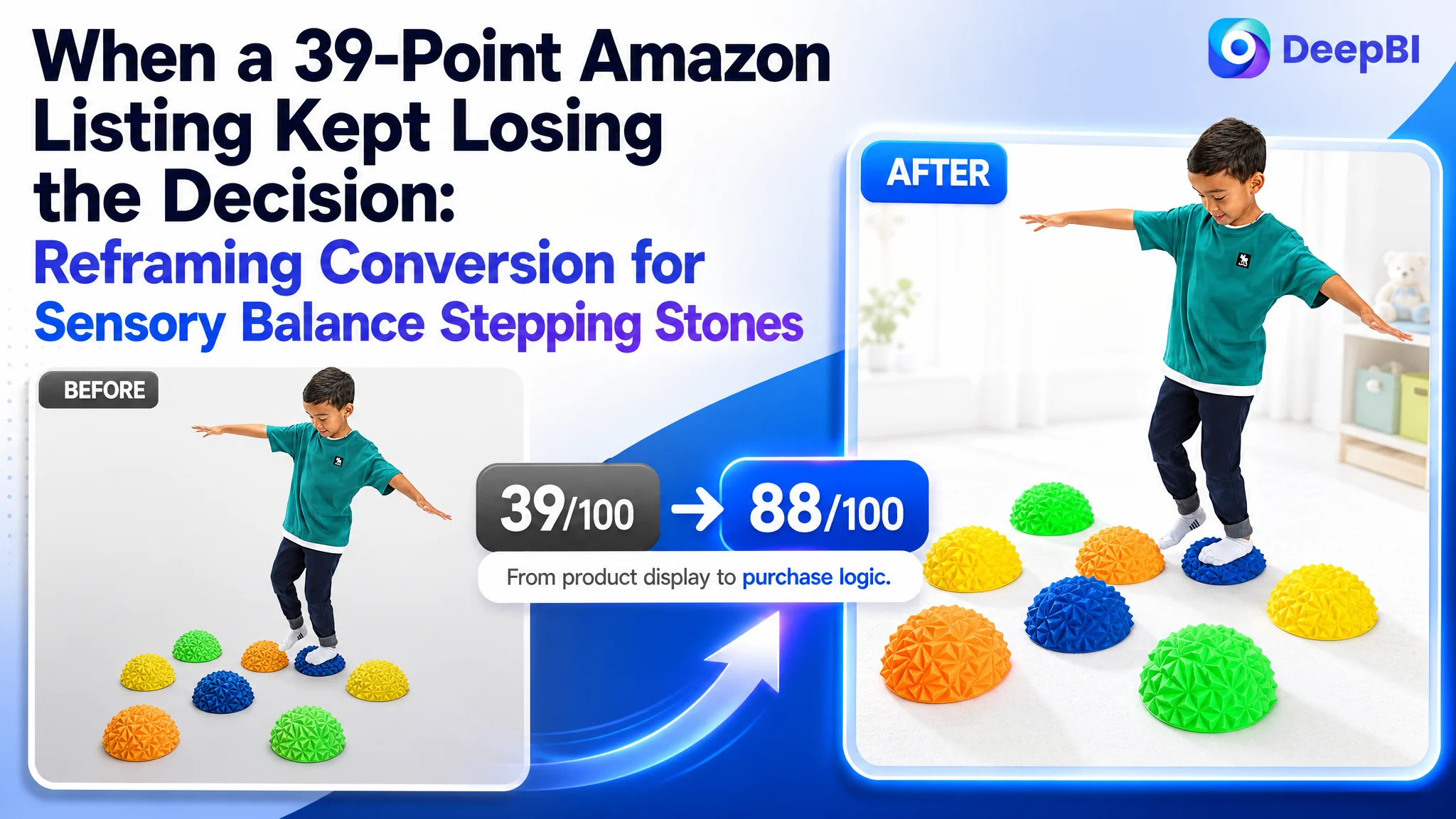
When a 39-Point Amazon Listing Kept Losing the Decision: Reframing Conversion for Sensory Balance Stepping Stones

When a 39-Point Amazon Listing Kept Losing the Decision: Reframing Conversion for Sensory Balance Stepping Stones

This case study examines an Amazon seller’s sensory balance stepping stones Listing, which scored 39 out of 100 against 88 for a comparable high-performing Listing. The issue extended beyond image quality across the title, main images, bullet points, A+ content, and reviews. DeepBI reframed the problem as a disconnected buying story and rebuilt the page around sensory differentiation, easy setup, developmental value, play scenarios, safety, cleaning, and compact storage. The case explains how connected product information can help parents understand the product, trust it, imagine using it, and find a reason to click and buy.

AI Specialist

DeepBI

AI Specialist

2026-07-27
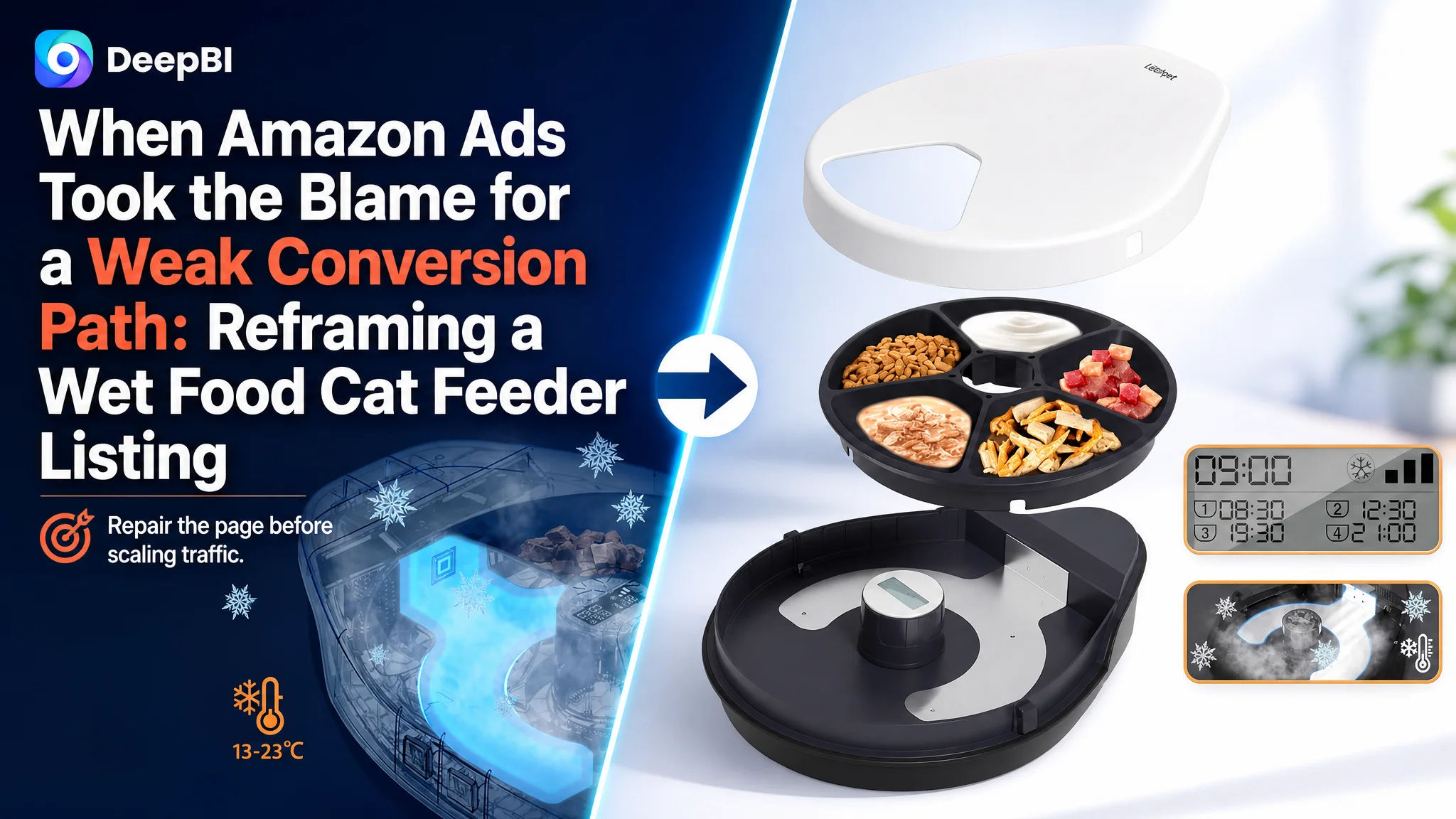
When Amazon Ads Took the Blame for a Weak Conversion Path: Reframing a Wet Food Cat Feeder Listing

When Amazon Ads Took the Blame for a Weak Conversion Path: Reframing a Wet Food Cat Feeder Listing

This case study examines an Amazon US seller’s wet food cat feeder Listing, where inefficient advertising initially appeared to be the main problem. DeepBI’s analysis identified a conversion gap: the product page scored 72 out of 100 versus 88 for a comparable high-performing Listing. The recommended direction prioritized Listing conversion before further ad tuning, emphasizing active refrigeration, multi-day feeding, pain-point-led bullets, and A+ content covering freshness, health, safety, cleaning, and real-life use. The case shows why sellers should assess whether a product page deserves more traffic when paid traffic becomes less efficient.

Marketing Automation Expert

DeepBI

Marketing Automation Expert

2026-07-27
When an Amazon Listing Had the Product but Not the Proof: Finding the Real Conversion Bottleneck in a Hair Accessory Organizer

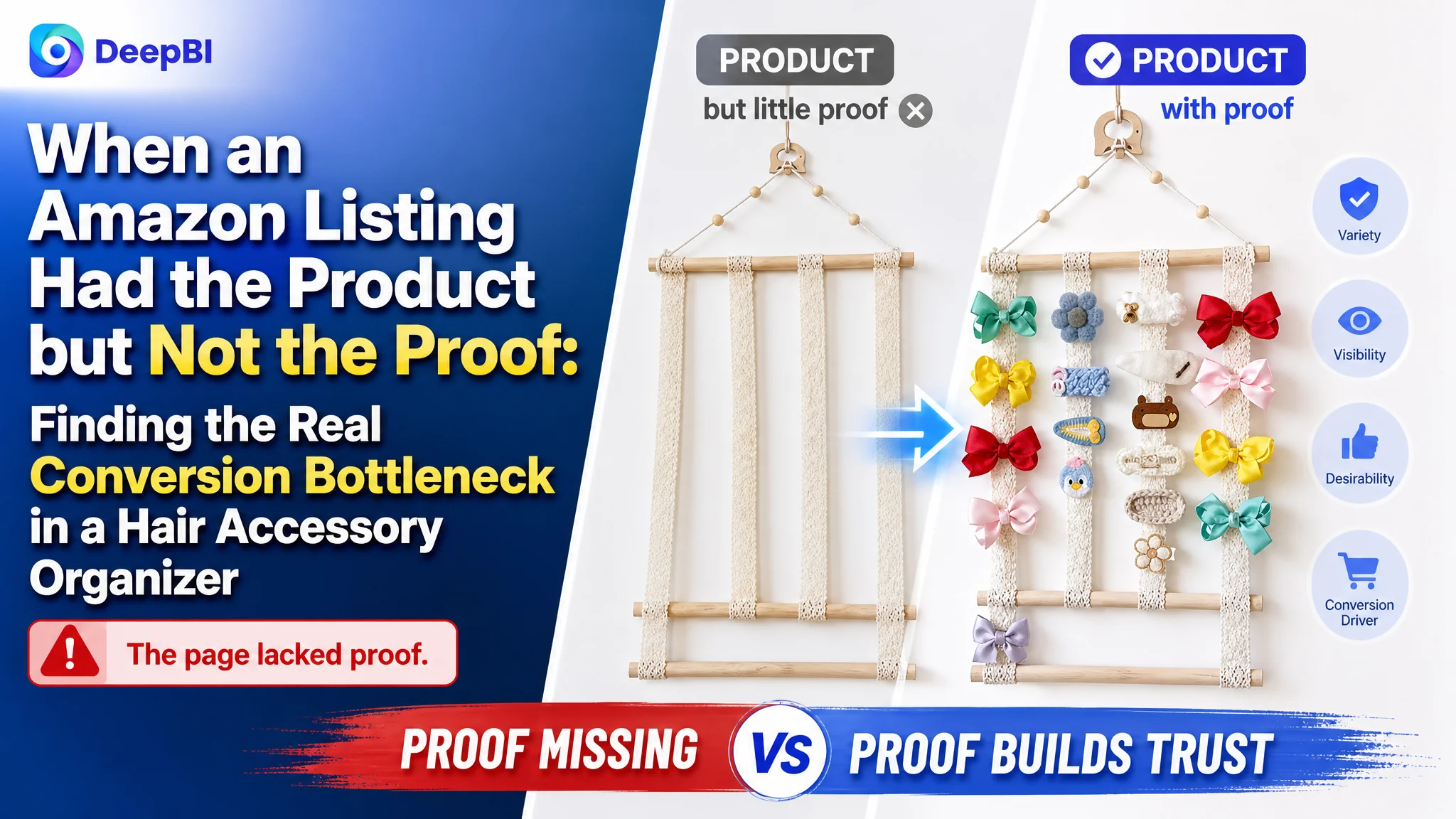
When an Amazon Listing Had the Product but Not the Proof: Finding the Real Conversion Bottleneck in a Hair Accessory Organizer

This case study examines how an Amazon seller improved a wall-mounted hair accessory organizer listing after discovering that conversion constraints extended beyond title, images, and bullet-point wording. DeepBI comparison identified a 46/100 listing score versus 86 for a closely matched high-performing competitor, with gaps in visual explanation, measurable proof, and review-based trust. The optimization rebuilt the product page as a complete buying argument, clarifying capacity, materials, installation, use scenarios, and long-term value through reorganized content, functional images, and an A+ story. It shows why exposure may not translate into orders.

AI Specialist

DeepBI

AI Specialist

2026-07-27
When Amazon Ads Could Not Fix the Conversion Leak: Reframing a Grill Cookbook Listing Around Trust and Page Logic

When Amazon Ads Could Not Fix the Conversion Leak: Reframing a Grill Cookbook Listing Around Trust and Page Logic

This case study examines how an Amazon US seller reframed a grill cookbook Listing after Amazon Ads could not solve its conversion leak. DeepBI’s comparison found a 34/100 Listing score versus 87/100 for a benchmark product, with major gaps in A+ content, visual proof, bullet-point logic, and reviews. The optimization rebuilt the product page as a sales argument by moving core search terms earlier in the title, verifying content quantities, showing practical use through the image sequence, and adding A+ modules. The case highlights why page evidence should be assessed before sending more traffic.

Marketing Automation Expert

DeepBI

Marketing Automation Expert
2026-07-27
When a 39-Point Amazon Listing Keeps Consuming Traffic: Reframing Conversion for a Pen Tire Pressure Gauge

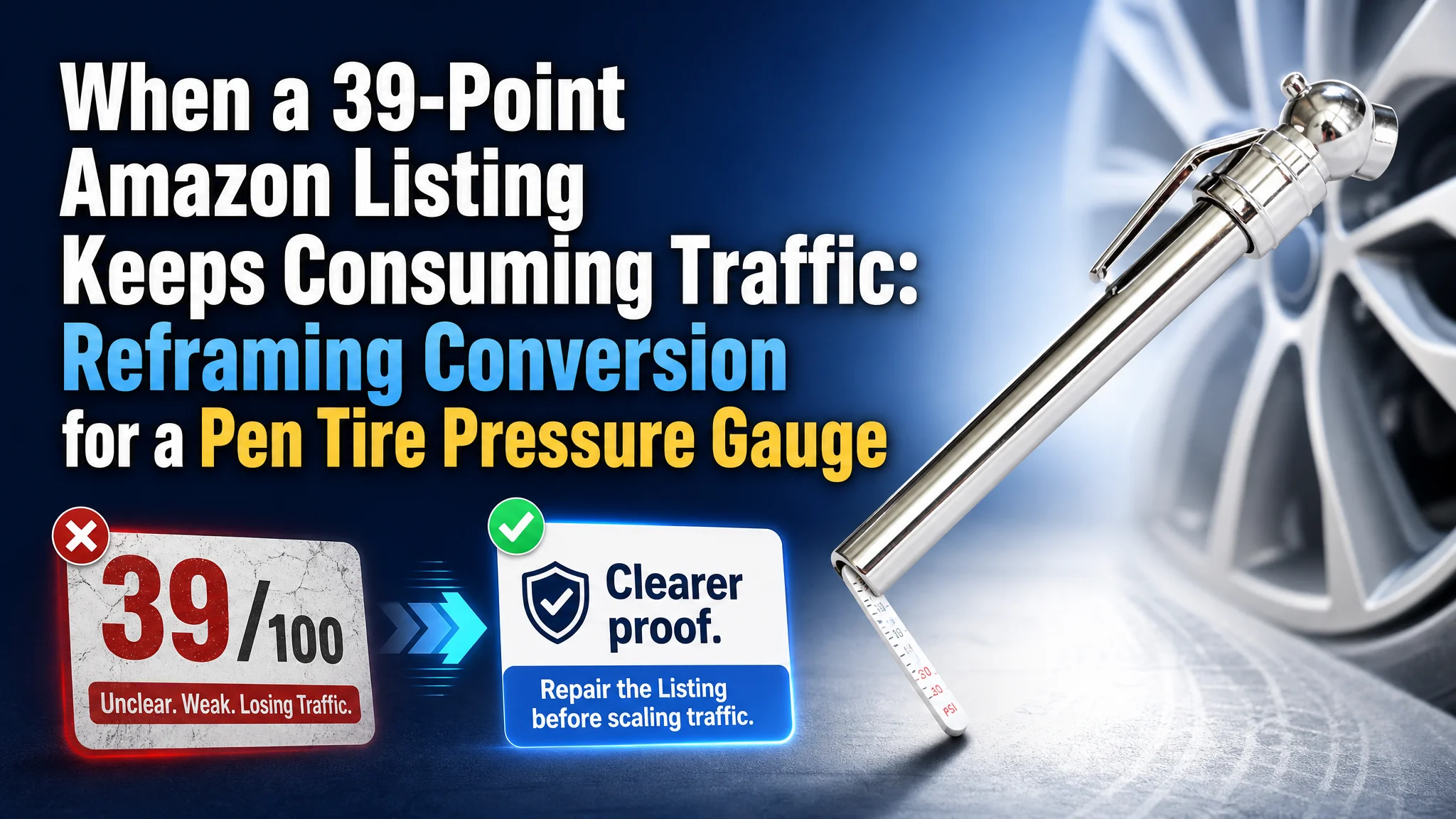
When a 39-Point Amazon Listing Keeps Consuming Traffic: Reframing Conversion for a Pen Tire Pressure Gauge

This case study examines how DeepBI reframed conversion for a portable pen-style tire pressure gauge on Amazon. Although the listing appeared functional, its title, images, bullet points, detail content, and review foundation did not provide enough evidence for shoppers to trust or understand the product. The diagnosis identified a missing buying logic rather than a simple specification gap. Optimization focused on visible proof, including a clearer main image, title, benefit-led bullets, and A+ content highlighting simple, battery-free, reliable use before pursuing more traffic.

AI Specialist

DeepBI

AI Specialist

2026-07-27
When a 53-Point Amazon Listing Lost the Conversion Battle: Reframing a Vegetable Chopper Product-Page Bottleneck

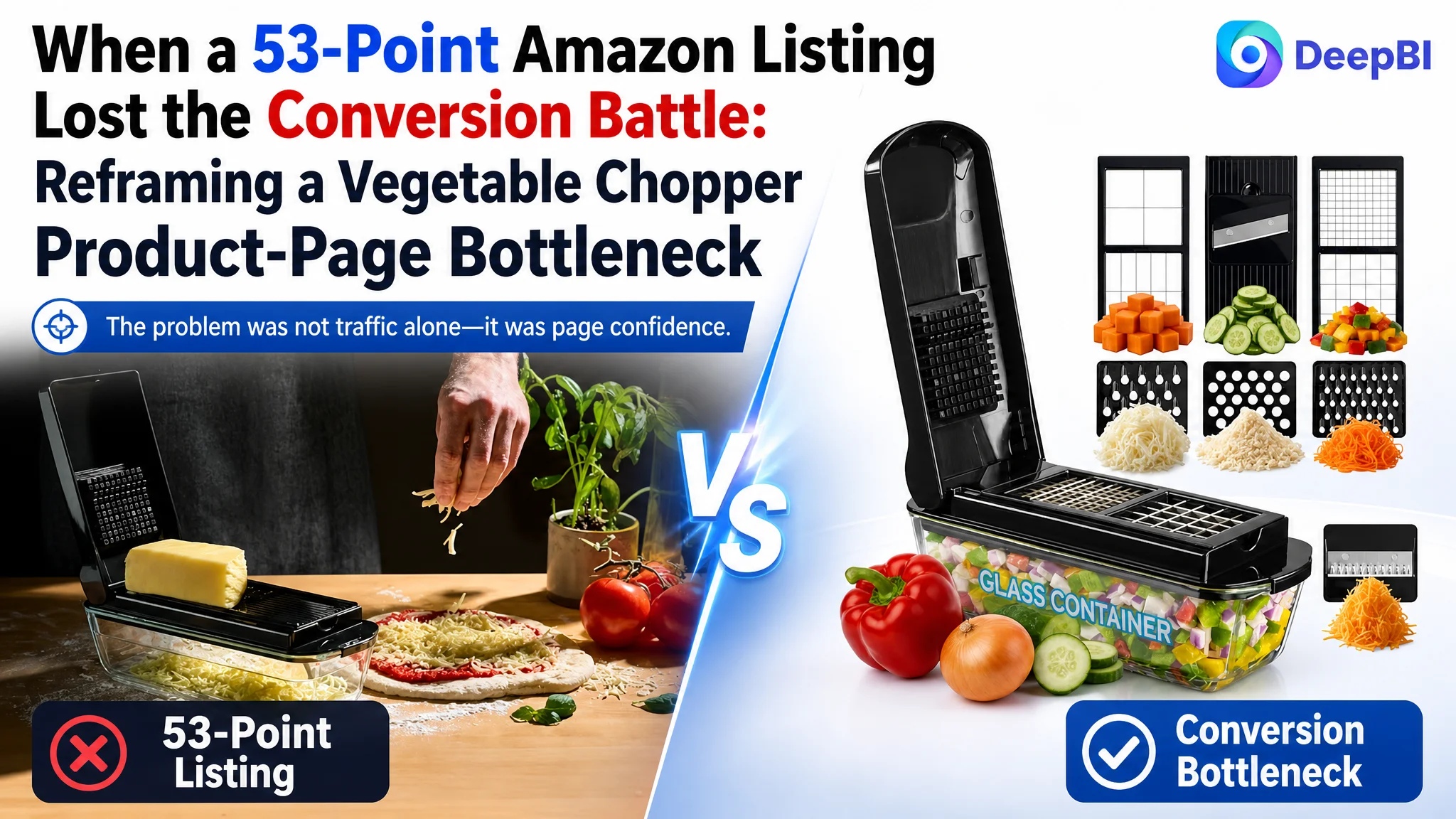
When a 53-Point Amazon Listing Lost the Conversion Battle: Reframing a Vegetable Chopper Product-Page Bottleneck

This case study examines an Amazon US vegetable chopper Listing that remained behind a comparable high-performing Listing despite relevant keywords, multiple functions, and in-use main images. DeepBI’s comparison revealed that the core issue was an incomplete conversion path rather than one weak image or missing keyword set. The product page scored only 3 out of 25 in the detail-page dimension and relied largely on text, while the benchmark used structured visual modules to explain the 13-in-1 configuration, materials, blade functions, operating steps, cleaning, use cases, and product value.

Marketing Automation Expert

DeepBI

Marketing Automation Expert
2026-07-27
When Personalization Hid the Real Conversion Gap: Diagnosing an Amazon Pocket Knife Listing That Lacked Trust

When Personalization Hid the Real Conversion Gap: Diagnosing an Amazon Pocket Knife Listing That Lacked Trust

This case study examines an Amazon US personalized pocket knife Listing whose gifting, engraving, and emotional-value positioning hid a deeper conversion gap. The page scored 74 out of 100 versus 87 for a comparable high-performing Listing, with the largest difference in customer reviews. The diagnosis focused on trust: proving the knife’s materials, customization process, quality, complete bundle, and usability more clearly. The optimization direction also strengthened the gifting story and reduced uncertainty at key decision points, rather than relying first on decorative messaging, more attractive copy, or additional advertising.

Marketing Automation Expert

DeepBI

Marketing Automation Expert

2026-07-24
When a Better-Looking Page Still Could Not Build Enough Trust: Reframing an Amazon Ceramic Planter Listing

When a Better-Looking Page Still Could Not Build Enough Trust: Reframing an Amazon Ceramic Planter Listing

This case study examines how an Amazon seller’s ceramic planter listing in the US marketplace was reframed after receiving a Listing score of 65 versus 88 for a closely matched competitor. The product included a glossy ceramic body, matching saucer, drainage hole, and mesh net, but the page did not consistently answer buyer questions about fit, durability, drainage, placement safety, and authenticity. The optimization focused on search coverage, clearer scale expectations, buyer-centered bullet points, and A+ content designed to establish functional trust.

AI Specialist

DeepBI

AI Specialist

2026-07-24
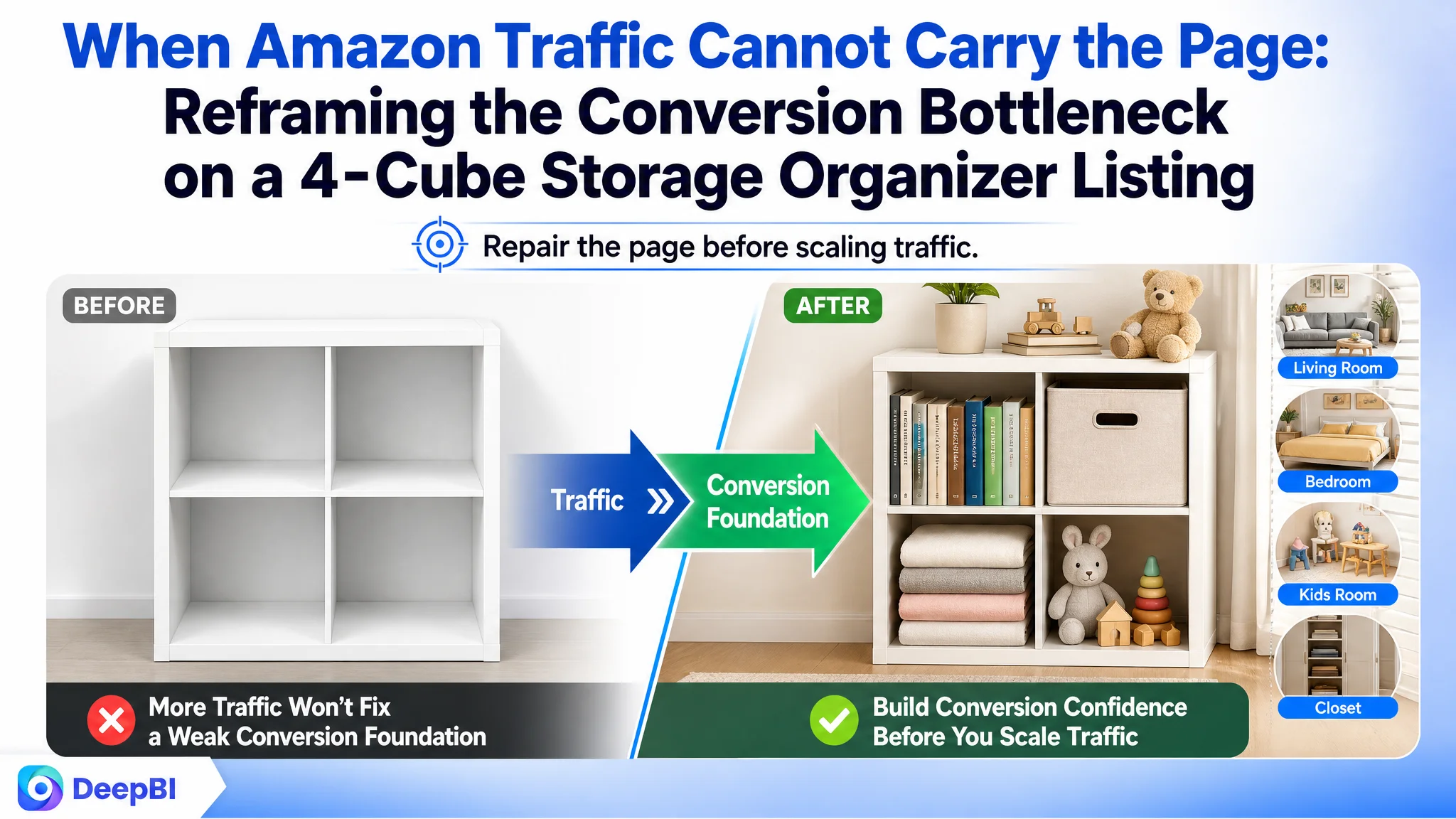
When Amazon Traffic Cannot Carry the Page: Reframing the Conversion Bottleneck on a 4-Cube Storage Organizer Listing

When Amazon Traffic Cannot Carry the Page: Reframing the Conversion Bottleneck on a 4-Cube Storage Organizer Listing

This case study examines an Amazon US marketplace listing for a four-cube storage organizer that attracted attention to discoverability but remained weak in conversion. DeepBI comparison scored the listing at 45/100 against an 87/100 benchmark, with the largest gap in the detail-page experience. The analysis shifted optimization away from traffic and isolated image changes toward sales logic: showing the organizer in real spaces, addressing stability and safety concerns, clarifying dimensions and storage capacity, and connecting features with everyday use. The central lesson is to assess whether a listing can convert paid traffic before increasing it.

Marketing Automation Expert

DeepBI

Marketing Automation Expert

2026-07-24
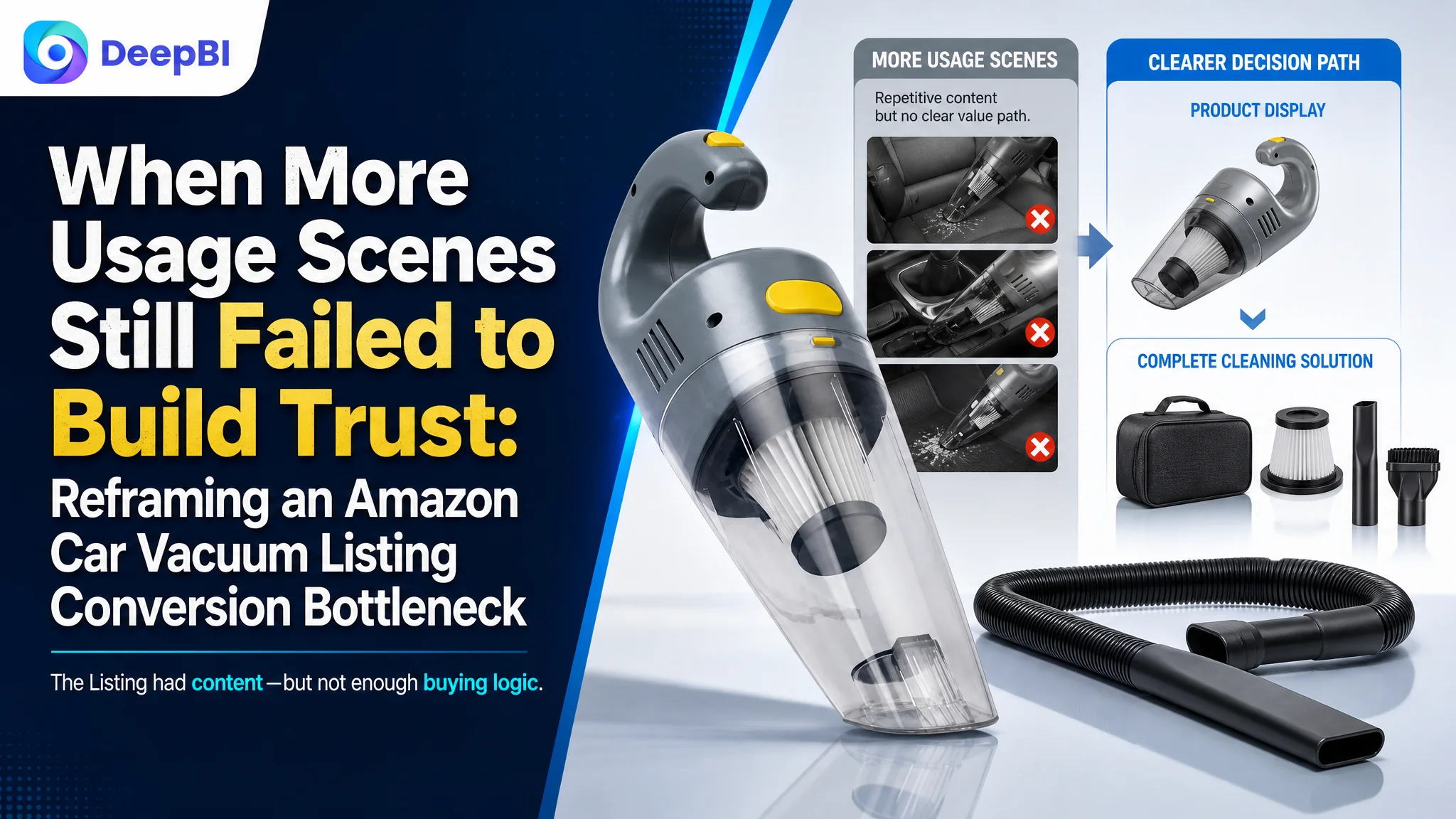
When More Usage Scenes Still Failed to Build Trust: Reframing an Amazon Car Vacuum Listing Conversion Bottleneck

When More Usage Scenes Still Failed to Build Trust: Reframing an Amazon Car Vacuum Listing Conversion Bottleneck

This case study examines an Amazon handheld car vacuum Listing in the US automotive accessories marketplace that scored 70, compared with 87 for a closely matched high-performing competitor. Although the page included product photography, usage scenes, brand content, recommendations, and video, it failed to create a clear buying decision. DeepBI reframed the bottleneck as weak decision logic rather than insufficient content. The revised direction emphasized earlier kit value, clearer power and reach specifications, problem-specific attachment benefits, and A+ content to address trust gaps before increasing advertising traffic.

AI Specialist

DeepBI

AI Specialist

2026-07-24
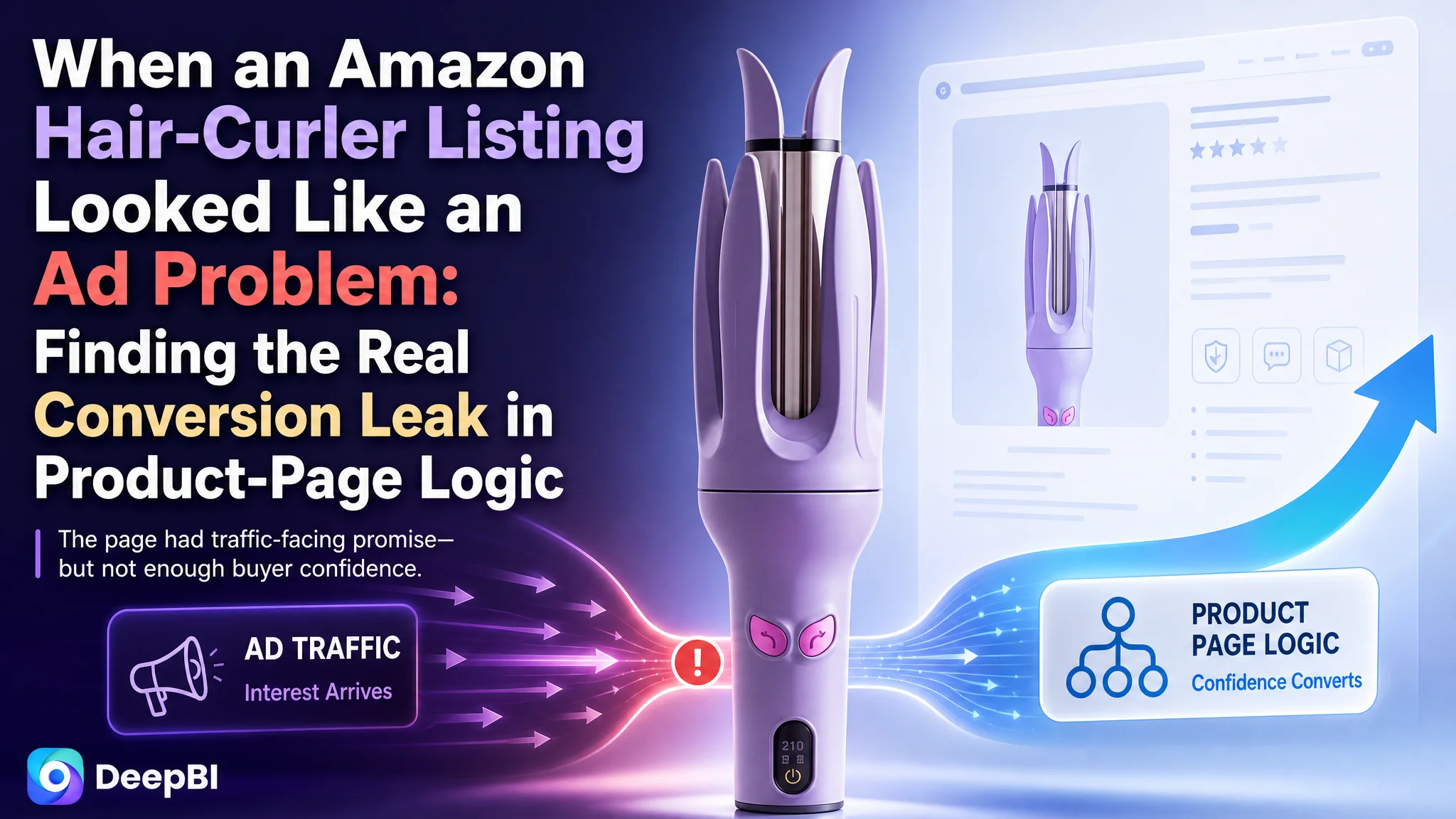
When an Amazon Hair-Curler Listing Looked Like an Ad Problem: Finding the Real Conversion Leak in Product-Page Logic

When an Amazon Hair-Curler Listing Looked Like an Ad Problem: Finding the Real Conversion Leak in Product-Page Logic

This case study examines an Amazon US beauty and haircare Listing for an automatic rotating curling iron that attracted interest but did not give shoppers enough confidence to purchase. With a score of 63 compared with 87 for a closely matched category-leading competitor, the page’s weakness extended beyond individual content elements. DeepBI identified a gap in decision logic around automation, safety, hair suitability, and lasting results. The resulting optimization direction focused on rebuilding the Listing’s sales logic through trust, safety, suitability, and visible results rather than simply adding keywords or traffic.

Marketing Automation Expert

DeepBI

Marketing Automation Expert
2026-07-24
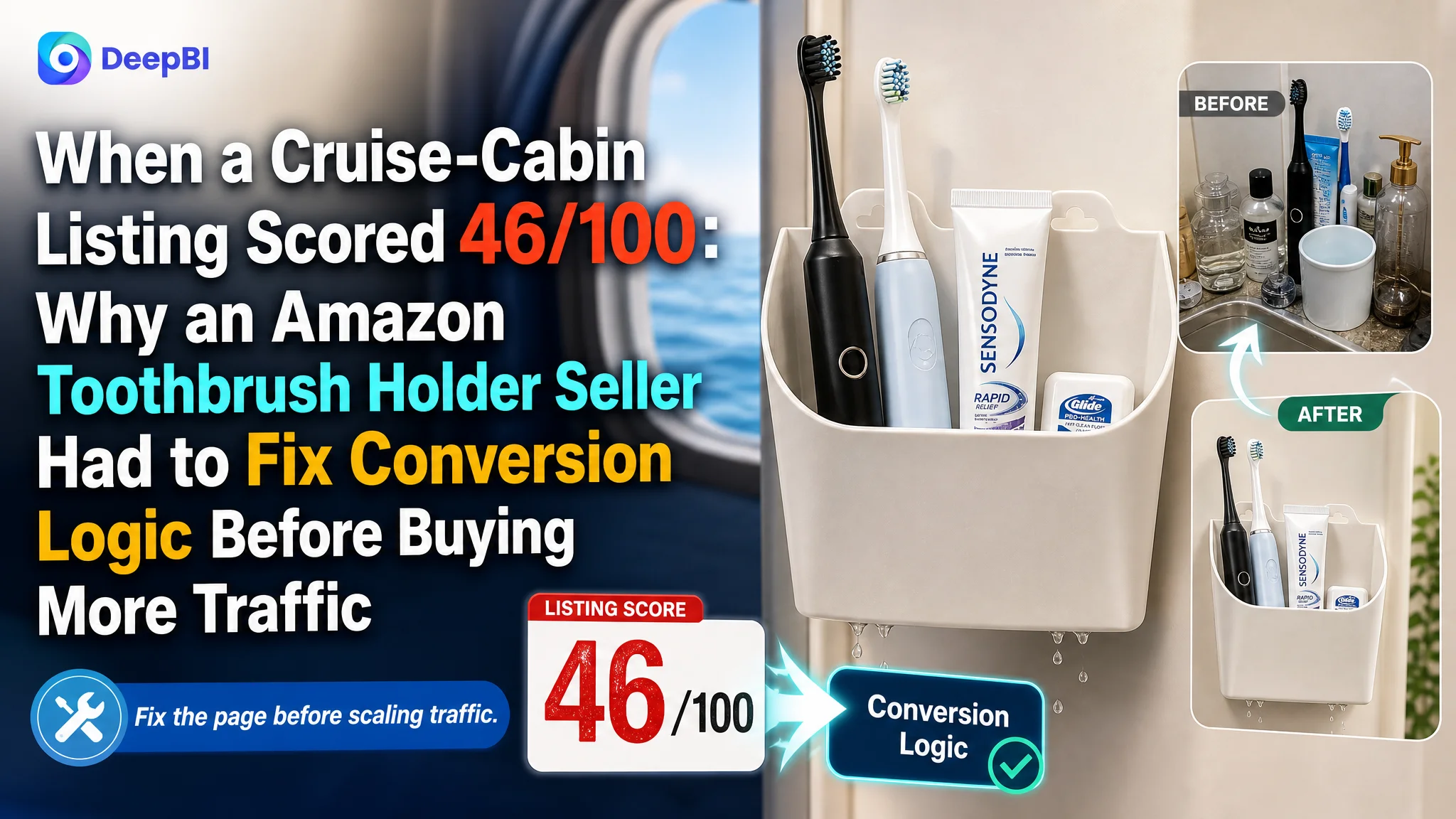
When a Cruise-Cabin Listing Scored 46/100: Why an Amazon Toothbrush Holder Seller Had to Fix Conversion Logic Before Buying More Traffic

When a Cruise-Cabin Listing Scored 46/100: Why an Amazon Toothbrush Holder Seller Had to Fix Conversion Logic Before Buying More Traffic

This case study examines how an Amazon seller of a magnetic toothbrush holder for cruise cabins addressed a conversion problem before increasing traffic. The product page scored 46 out of 100, compared with 87 for a stronger category listing. The analysis identified missing conversion structure, weak visual proof, and no review foundation. The proposed rebuild presents the cramped cruise-bathroom problem, demonstrates magnetic mounting, capacity and drainage, explains surface compatibility, and uses A+ content to reduce hesitation. The case shows why sellers should assess listing conversion before scaling ads or repeatedly changing keywords.

AI Specialist

DeepBI

AI Specialist

2026-07-23
When a Zero-Review Amazon Listing Mistook a Trust Gap for an Ads Problem in Baby Carriers

When a Zero-Review Amazon Listing Mistook a Trust Gap for an Ads Problem in Baby Carriers

This case study examines an Amazon US baby carrier Listing with zero customer reviews that attracted attention but lacked the page-level evidence needed to convert cautious parents. A comparison scored the Listing at 70 out of 100 versus 88 for a comparable high-performing page. The main constraint was a trust gap involving limited ergonomic proof and a feature-led A+ experience. Optimization focused on Listing conversion, clearer title and bullets, and a persuasion sequence addressing back strain, baby positioning, weight distribution, ease of use, and verifiable product evidence before expanding traffic.

Marketing Automation Expert

DeepBI

Marketing Automation Expert
2026-07-23
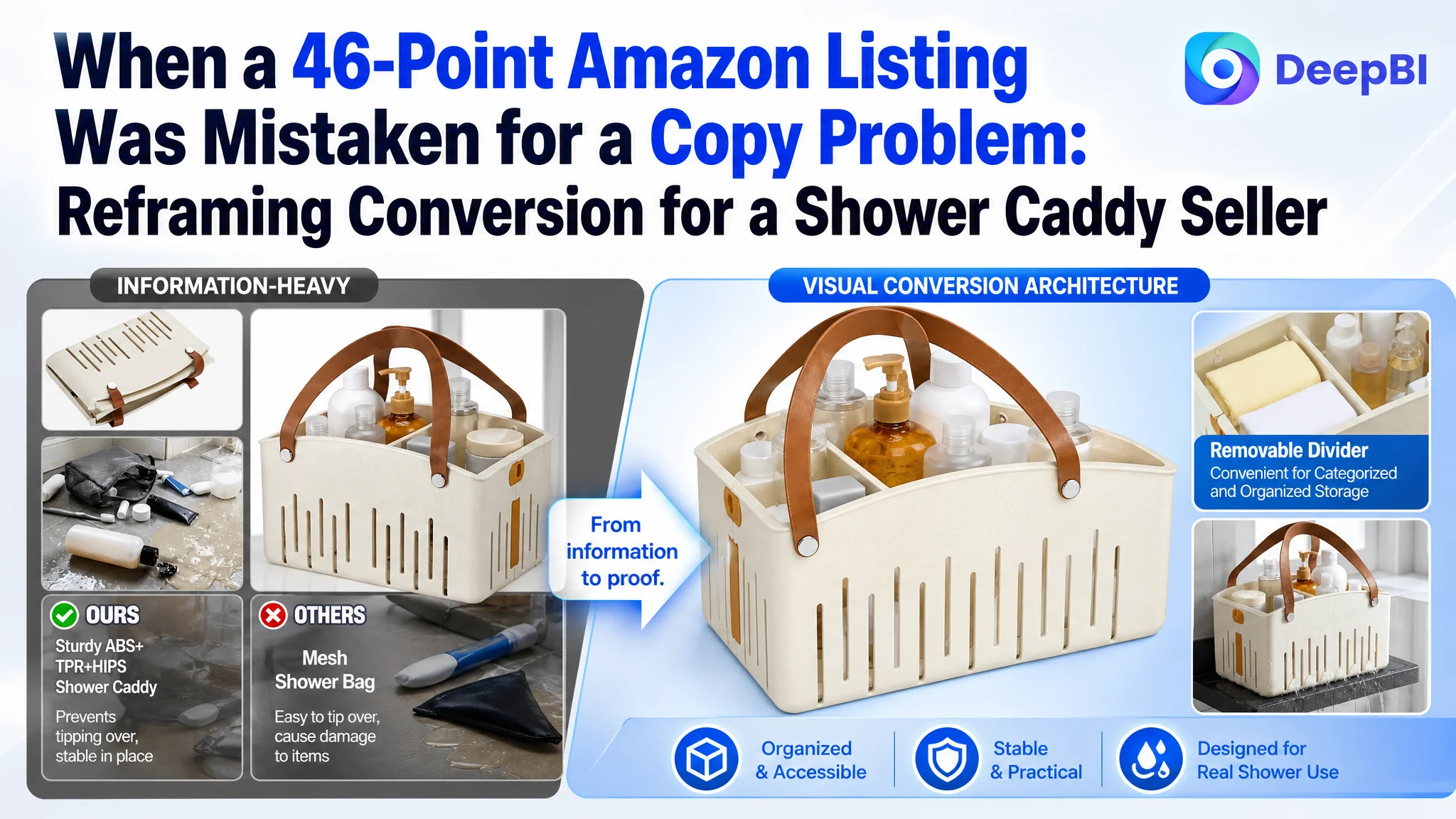
When a 46-Point Amazon Listing Was Mistaken for a Copy Problem: Reframing Conversion for a Shower Caddy Seller

When a 46-Point Amazon Listing Was Mistaken for a Copy Problem: Reframing Conversion for a Shower Caddy Seller

This case study examines how a US Amazon seller addressed a shower caddy Listing that scored 46 out of 100 against 87 for a comparable high-performing Listing. Although the page included relevant keywords, feature-focused images, and structural bullet points, it lacked visual conversion architecture, meaningful A+ content, scenario-based explanation, and proof of storage and hygiene value. The optimization reframed the product page as a decision path, connecting capacity, drainage, stability, removable dividers, fold-flat storage, and use across dorms, gyms, bathrooms, and travel.

AI Specialist

DeepBI

AI Specialist

2026-07-23